

Today marks 42 years since the Gukurahundi atrocities— a tragic chapter in Zimbabwe’s history that left deep scars, were launched particularly in Matabeleland and the Midlands region.
Beginning in the early 1980s, a brutal government campaign targeted suspected opposition groups, with the Ndebele ethnic community bearing the brunt of the violence. Thousands of innocent civilians were killed, and the repercussions of this tragedy continue to resonate.
Despite the passage of time, the trauma of Gukurahundi remains largely unresolved. Efforts by the state to suppress the truth and destroy memorial plaques dedicated to the victims have hindered full acknowledgment and justice.
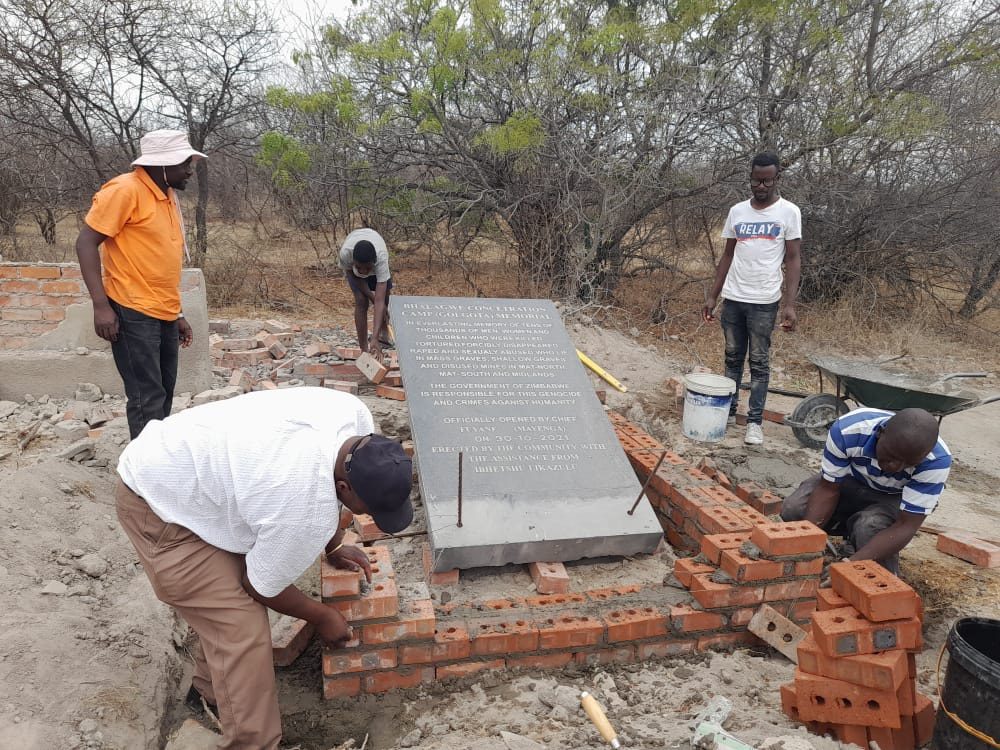
This anniversary serves as a stark reminder of the deep wounds that remain unaddressed and the ongoing struggle for recognition, accountability, and healing for survivors and the families of those affected.
On this topic
As part of efforts to ensure the atrocities are not forgotten or erased from history, several organisations have in the past held commemorative events or put up plaques in honour of the victims.
Memorialisation is not just about honouring the victims but also about fostering accountability, truth-telling, and reconciliation.
Organizations like Ibhetshu Likazulu have led initiatives to memorialise Gukurahundi by erecting plaques and holding commemorative events. However, these efforts face significant resistance, including the repeated destruction of memorial plaques and attempts to suppress public discourse.
To date, six memorial plaques erected by Ibhetshu Likazulu have been destroyed, four in Bhalagwe and two in Solobela.
READ: https://cite.org.zw/fourth-gukurahundi-plaque-vandalised-in-bhalagwe/
The most recent plaque in Bhalagwe was destroyed in early 2024, marking the fourth plaque lost in the area, while the second plaque in Solobela was destroyed in 2021.
“As Ibhetshu Likazulu, the journey of putting up plaques has not been an easy one. It worked in mobilizing communities and exposing even the perpetrators. However, the challenges have been related to resources—it is expensive to erect plaques. When seeking support, the first question people ask is: ‘How will you ensure the plaques won’t be destroyed, especially considering what has happened?’ As an organization, we cannot guarantee their protection,” said Mbuso Fuzwayo, Secretary-General of Ibhetshu Likazulu.
Fuzwayo argued that it is the government’s duty to protect the plaques, as they have committed to addressing past injustices.
“We strongly believe it is the duty of the government to protect the plaques and to engage us if they are unhappy with them. The government has chosen the path of addressing past injustices, allowing people the freedom to speak about them. People express their feelings in different ways,” he said.
He added that placing plaques is another form of dialogue about Gukurahundi.
“What the government has done clearly shows they do not want anything permanent. They want people to talk about Gukurahundi, but they don’t want permanent reminders, especially in areas where they have attempted to misinform the public,” said Fuzwayo.
He further described the destruction of plaques as an attempt to erase history.
“The renaming of sites like Bhalagwe to designate them as heroes’ acres is another erasure. If we are genuine and understand history, we cannot call a crime scene a heroes’ acre,” he argued.
Fuzwayo said acknowledgment from the government and military, as well as justice for victims, are crucial steps in reconciliation.
“We expect the perpetrators to acknowledge their actions. Victims also need to face their killers and rapists—that is the missing link,” he said.
He called for a change in government attitude toward memorialisation.
“I don’t think there will be a change in the government’s stance on destruction. What we need to do is urge the government to genuinely resolve this issue by allowing the erection of plaques. If the government disagrees with the messages on the plaques, let’s have a dialogue to agree on what can be inscribed,” he suggested.
Fuzwayo also advocated for the establishment of a genocide museum, stating,
“If the government is genuine, we need a genocide museum—whether in Harare, Midlands, Bulawayo, or anywhere else. We also need to hear the government’s voice: why did they kill people? Where are those who disappeared?”
Dr. Khanyile Mlotshwa, an academic, highlighted the importance of memorialisation in building national identity.
“Peoplehood is built around memories. I have ambivalent feelings about the fact that memories of Gukurahundi have become central to Ndebele identity. While it is a sad chapter in Matabeleland’s history, it seems that pain, exile, and war are the memories that often define a nation’s fabric,” he said.
Dr. Mlotshwa further noted how the Gukurahundi atrocities shaped Ndebele nationalism.
“Ndebele people were killed because they are Ndebele. This cemented their Ndebeleness, as sad as it is. People don’t emerge in history fully formed; their identities develop over time through such experiences,” he explained.
He added that preserving the memories of Gukurahundi is a way of holding onto Ndebele identity.
“By keeping these memories alive, Ndebele people have resisted efforts to erase their identity. Within Zimbabwean nationalism, Gukurahundi is a source of shame—a shame that a nation killed part of itself for selfish, evil reasons,” he said.





Leave a Reply